
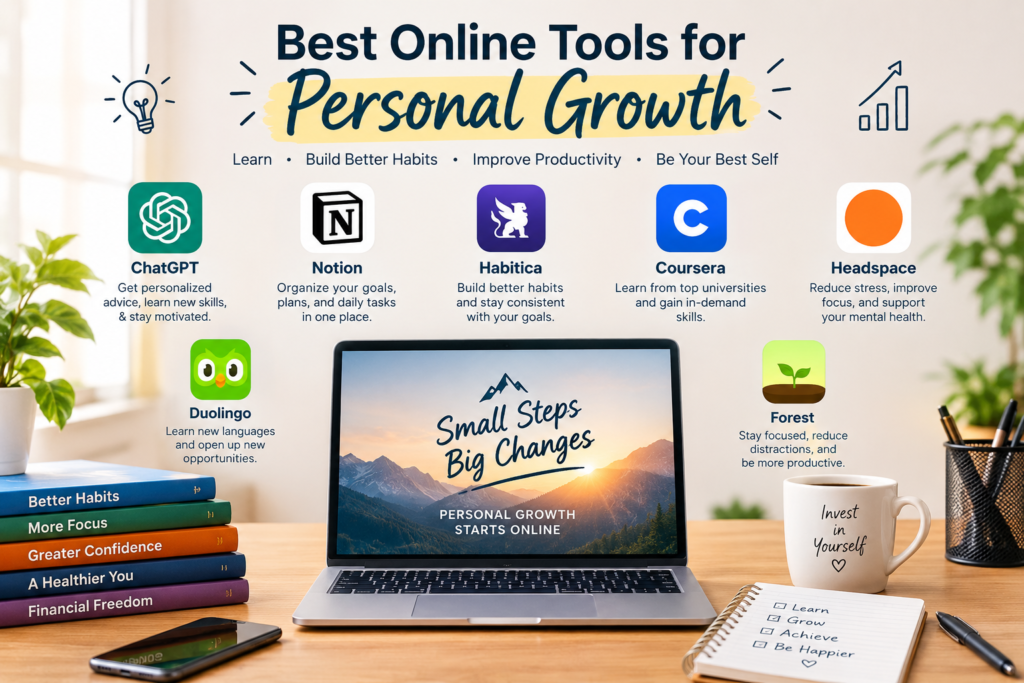
Introduction
Personal growth does not happen overnight. It develops through small improvements in the way we think, learn, manage time, communicate, and handle everyday challenges. Today, technology gives people access to practical resources that can support these improvements without requiring a major lifestyle change. The best online tools for personal growth can help users build better habits, organize their goals, learn new skills, improve productivity, and understand themselves more clearly. When people choose the right tools and use them consistently, digital resources can become useful companions on their personal development journey.
Why Online Tools Can Support Personal Growth
Personal growth involves more than reading motivational quotes or watching inspirational videos. It requires action, reflection, learning, and consistency. Online tools can make these activities easier to manage because they provide structured ways to track progress and maintain focus.
For example, a person who wants to improve time management can use a digital planner to organize daily responsibilities. Someone who wants to develop a new skill can use an online learning platform to follow lessons at their own pace. Similarly, people who struggle with consistency can use habit-tracking tools to monitor their progress.
The main advantage comes from convenience. Most online tools work across different devices, allowing users to continue their routines from home, work, or while traveling.
1. Goal-Setting and Planning Tools
Clear goals give personal growth a direction. Without specific goals, people may spend time on activities that do not contribute to their long-term development.
Goal-setting platforms help users break large objectives into smaller and more manageable steps. Instead of writing “I want to become healthier,” a person can create specific goals such as exercising three times a week, improving sleep habits, or preparing healthier meals.
Digital planning tools also help users set deadlines and priorities. They can create daily tasks, weekly targets, and long-term objectives in one place. This approach makes progress easier to measure and reduces the feeling of being overwhelmed.
How to Use Goal Tools Effectively
Start with two or three important goals instead of creating a long list. Break each goal into practical actions and review your progress regularly. If a goal no longer matches your priorities, adjust it rather than abandoning your entire plan.
2. Online Learning Platforms
Learning remains one of the strongest forms of personal development. Online education allows people to learn subjects that support their careers, hobbies, communication skills, or general knowledge.
Users can study subjects such as writing, programming, business, languages, design, psychology, finance, and leadership. Many platforms organize lessons into structured courses, which makes it easier to follow a learning path.
The key to successful online learning involves consistency. Completing one lesson every day often produces better results than studying for several hours once a month. Learners should also practice new skills instead of simply consuming educational content.
3. Habit-Tracking Tools
Good habits often produce lasting personal improvements. However, people sometimes struggle to remember whether they completed a particular habit each day.
Habit trackers solve this problem by giving users a simple way to record daily actions. A person might track reading, exercise, meditation, writing, studying, or reducing screen time.
Visual progress can also increase motivation. When users see several consecutive successful days, they often feel encouraged to maintain the routine. However, users should avoid treating one missed day as failure. Personal growth depends on returning to the habit and continuing the process.
4. Productivity and Focus Tools
Distractions can make personal development difficult. Notifications, social media, unnecessary tasks, and constant multitasking can reduce concentration.
Productivity tools help users organize their workload and protect time for important activities. Task managers can separate urgent responsibilities from less important tasks, while focus timers can encourage people to work for a specific period without unnecessary interruptions.
A useful productivity system should remain simple. If managing the system takes more time than completing the work, the system needs adjustment.
5. Journaling and Self-Reflection Tools
Self-awareness plays an important role in personal growth. People can improve their decisions when they understand their thoughts, emotions, strengths, weaknesses, and recurring behaviors.
Digital journaling tools provide a private space for reflection. Users can write about their experiences, record achievements, identify challenges, and consider what they want to change.
A simple journaling routine can start with three questions:
- What went well today?
- What challenged me today?
- What can I do better tomorrow?
These questions encourage honest reflection without making the process complicated.
6. Mindfulness and Mental Wellness Tools
Personal growth also requires attention to emotional balance and mental well-being. Mindfulness tools can guide users through breathing exercises, relaxation practices, meditation sessions, and short periods of focused awareness.
These tools can help people create moments of calm during busy days. Users should approach them as practical habits rather than instant solutions. A few minutes of consistent practice can become more useful than occasional long sessions.
How to Choose the Right Tools
The best online tools for personal growth depend on individual needs. One person may need a learning platform, while another may benefit more from a habit tracker or planning system.
Before choosing a tool, consider these questions:
- What specific area do I want to improve?
- Does the tool solve a real problem?
- Can I use it consistently?
- Does it offer useful features without unnecessary complexity?
- Can I measure my progress with it?
People should avoid downloading dozens of applications simply because they appear useful. Too many tools can create confusion and make personal development feel like another responsibility.
Creating a Simple Personal Growth System
A strong personal development system does not need complicated technology. Start with one tool for planning, one resource for learning, and one method for tracking habits or reflection.
For example, a person could set three monthly goals, spend 20 minutes each day learning a new skill, and review their progress every Sunday. This simple system creates structure while leaving enough flexibility for everyday life.
Consistency matters more than the number of tools. A basic system that someone follows for six months can provide greater value than an advanced system that they abandon after one week.
Conclusion
Personal growth becomes easier when people turn good intentions into repeatable actions. Digital resources can support that process by helping users set goals, learn skills, track habits, manage time, reflect on experiences, and maintain focus. The best online tools for personal growth do not replace personal effort; they make that effort easier to organize and maintain.
The most effective approach involves choosing tools according to your actual needs rather than following every new productivity trend. Start small, measure progress, adjust your routine when necessary, and focus on consistency. With the right digital support and a willingness to take action, online tools can become valuable resources for long-term personal development.
